Introduction
Designing a living room with tv sounds simple—until you actually try to make it look good and feel comfortable. You want a space that’s stylish, functional, and doesn’t revolve awkwardly around a giant black screen.
The truth is, most people get this wrong. Either the TV dominates the room, or it’s shoved somewhere inconvenient just to “hide” it. Neither approach works long-term. A well-designed living room should balance entertainment with aesthetics, not sacrifice one for the other.
If you’ve ever struggled with furniture placement, awkward layouts, or making your TV blend into your decor, you’re not alone. This guide breaks it all down in a practical, no-nonsense way—so you can build a space that actually works in real life.


Understanding the Role of a Living Room With TV
A living room with tv is no longer just a place to watch shows—it’s the center of daily life. It’s where families gather, guests hang out, and you unwind after long workdays.
Why This Matters More Than You Think
Most people design around furniture first and shove the TV in later. That’s backwards.
The TV dictates:
- Viewing angles
- Seating layout
- Lighting conditions
- Wall focal point
If you don’t plan around it from the start, you’ll always feel something is “off.”
Definition: What Makes a Good Setup?
A well-designed TV living room should:
- Offer comfortable viewing from all seats
- Maintain visual balance
- Avoid glare or poor lighting
- Blend technology with decor
Best Layout Ideas for a Living Room With TV
There’s no “one-size-fits-all” layout. It depends on your space, but some setups consistently outperform others.
1. Centered TV Layout
The TV sits directly across from the main seating.
Best for:
- Medium to large rooms
- Symmetrical designs
Why it works:
- Natural viewing alignment
- Clean, organized look
2. Corner TV Layout
This is underrated but effective in tight spaces.
Pros:
- Saves wall space
- Opens up room flow
Cons:
- Can feel less immersive
3. Floating TV Wall
Mount the TV and eliminate bulky units.
Benefits:
- Modern aesthetic
- More floor space
- Easier cleaning
4. TV Above Fireplace (Use Carefully)
This is popular—but often poorly executed.
Problem:
- Neck strain
- Heat damage
Fix:
- Keep TV slightly above eye level
- Use tilt mounts
Choosing the Right TV Placement
Let’s get brutally honest—most people mount their TV too high. That’s the biggest mistake.
Ideal Viewing Height
Your eyes should align with the center of the screen when seated.
Rule:
- TV center = eye level (~42 inches from floor on average)
Viewing Distance Formula
- 55” TV → 7–9 feet
- 65” TV → 8–10 feet
- 75” TV → 10–12 feet
Too close = eye strain
Too far = poor experience
Wall vs Stand
| Option | Pros | Cons |
|---|---|---|
| Wall Mount | Sleek, saves space | Fixed position |
| TV Stand | Flexible, storage | Takes floor space |
Furniture Arrangement Strategies
Your furniture should serve the TV—not fight it.
Core Setup
- Sofa facing TV
- Secondary seating angled inward
- Coffee table centered
Avoid This Mistake
Don’t scatter seating randomly just to “fill space.”
Instead:
- Create a conversation zone
- Keep clear sightlines
Pro Layout Tip
Use a rug to define the viewing area. It anchors everything visually.
Wall Design Ideas for TV Spaces
A living room with tv doesn’t have to look boring. The wall behind your TV can become a design feature.


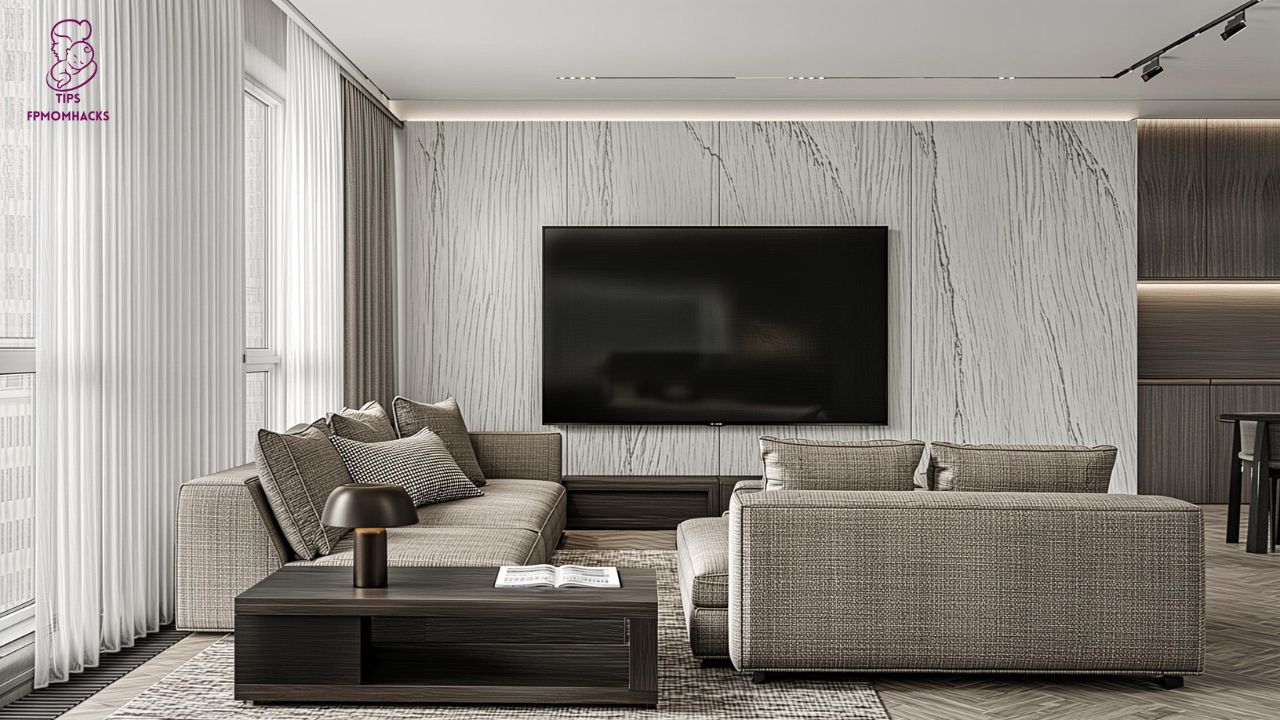
1. Feature Wall Panels
- Wood slats
- Marble textures
- Textured paint
Adds depth and luxury instantly.
2. Built-In Shelves
Combine storage with style.
Use for:
- Books
- Plants
- Decorative pieces
3. Gallery Wall Around TV
Blend the TV into art.
Tip: Use black frames to match the screen.
4. Hidden TV (Luxury Option)
- Sliding panels
- Mirror TVs
Not necessary—but impressive.
Lighting Tips for a Better Viewing Experience
Lighting is where most setups fail.
What You Should Do
- Use soft ambient lighting
- Add LED backlighting behind TV
- Use curtains to control glare
What You Should Avoid
- Bright lights directly facing screen
- Harsh overhead lighting
Small Living Room With TV: Smart Solutions
This is where things get tricky—and where most people mess up.

Space-Saving Strategies
- Wall-mount the TV
- Use slim furniture
- Choose multifunctional pieces
Layout Trick That Works
Place sofa against wall + TV opposite
→ maximizes open space
Color Psychology
- Light colors = bigger feel
- Dark colors = cozy but smaller
Common Mistakes to Avoid
Let’s cut the fluff—these mistakes ruin most setups.
1. Mounting TV Too High
Feels unnatural. Fix it immediately.
2. Ignoring Lighting
Glare kills viewing experience.
3. Overcrowding Furniture
More furniture ≠ better design.
4. Ignoring Cable Management
Messy wires destroy aesthetics.
5. Designing Only for Looks
If it’s uncomfortable, it’s a failure.
Personal Design Perspective & Market Insight
If you’re treating this as just “home decor,” you’re thinking too small—especially from an e-commerce perspective.
Market Reality
Search demand for:
- “living room with tv ideas”
- “tv wall design”
- “modern tv unit”
is massive and growing.
Opportunity (Brutal Truth)
Most sellers:
- Copy generic Pinterest designs
- Don’t solve real layout problems
- Ignore functionality
That’s why they fail.
Winning Strategy
If you want to dominate:
Sell solutions, not products.
Examples:
- TV wall panels with installation guides
- Space-saving TV units for small homes
- Cable management kits bundled with decor
Consumer Psychology
People want:
- Clean spaces
- Instagram-worthy setups
- Easy installation
If your product solves all three → you win.
FAQs
What is the best position for a TV in a living room?
Directly in front of the main seating at eye level. Anything else compromises comfort.
How do I decorate a living room with tv without making it look boring?
Use feature walls, shelves, or artwork to blend the TV into the design.
Should the TV be the focal point?
Yes—but balanced. It shouldn’t dominate the entire room.
What size TV is best for a living room?
Depends on distance, but 55–75 inches works for most homes.
Is mounting a TV better than using a stand?
Mounting saves space and looks modern, but stands offer flexibility.
How do I hide cables in a living room with tv?
Use wall conduits, cable boxes, or built-in furniture solutions.
Can I put a TV in a small living room?
Yes—just prioritize wall mounting and minimal furniture.
What lighting is best for TV viewing?
Soft ambient lighting and LED backlighting reduce eye strain.
Conclusion
A well-designed living room with tv isn’t about copying trends—it’s about making smart decisions that actually improve your daily life.
If your setup feels awkward, uncomfortable, or cluttered, the problem isn’t your space—it’s your planning. Fix the layout, respect viewing angles, and simplify your design.
Do that, and your living room won’t just look better—it’ll work better.