
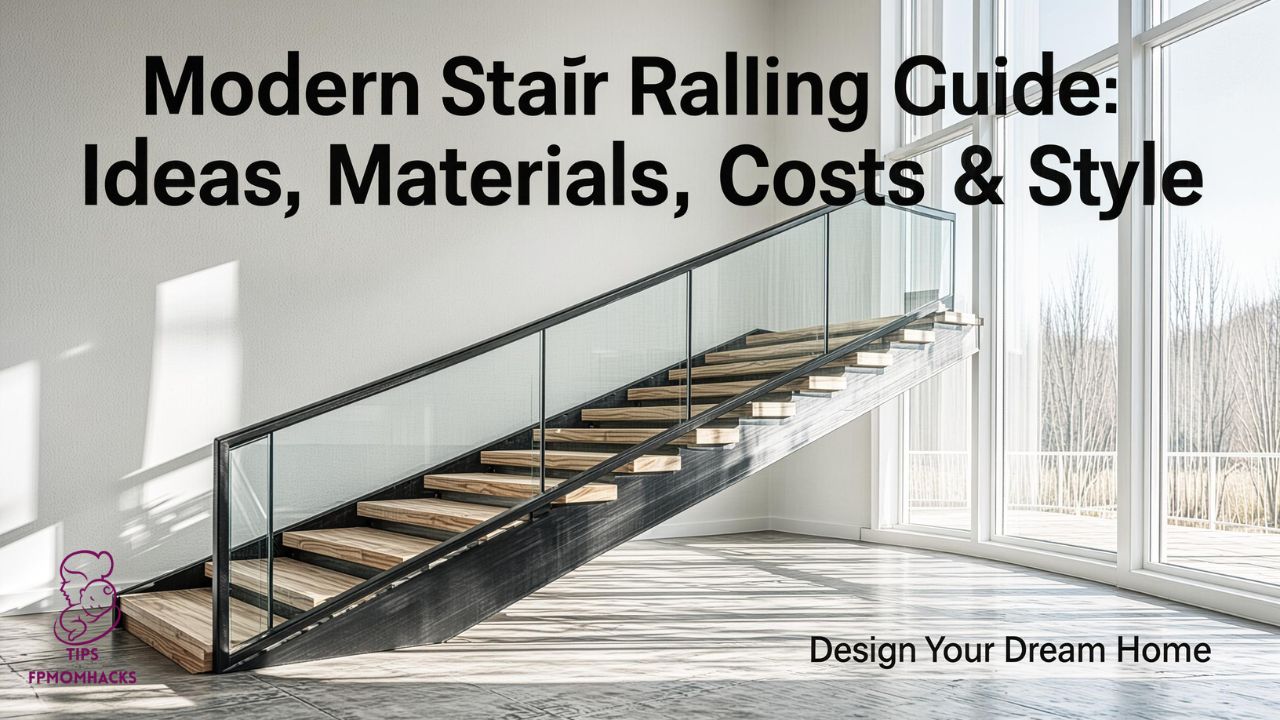
Modern staircases have a funny way of becoming invisible until the day they suddenly do not. One outdated baluster, one bulky handrail, one dark, heavy-looking staircase, and the whole entry can feel stuck in another decade. That is exactly why modern stair railing has become such a big design conversation for homeowners who want their spaces to feel cleaner, brighter, and more current.
The right railing does more than prevent falls. It shapes sightlines, affects how open a room feels, and can quietly raise the perceived value of the entire home. In a time when homeowners are still spending seriously on remodeling, details like stair design matter more than ever. Houzz reported that more than half of homeowners renovated in 2024, with a median spend of $20,000, showing that people are still investing in upgrades that improve both function and style.
If you are planning a refresh, building from scratch, or simply tired of staring at an awkward staircase every day, this guide will help you choose a railing that feels beautiful, safe, and lasting. We will walk through materials, design styles, costs, layout tips, and the small decisions that make the biggest difference.
Why modern stair railing matters more than you think
A staircase is rarely just a staircase. In many homes, it is the first architectural feature people notice when they walk in. Even when it sits off to the side, it influences the visual rhythm of the room. A clunky, traditional railing can make a fresh renovation feel unfinished. On the other hand, a well-designed modern stair railing can sharpen the whole space without needing a full remodel.
There is also an emotional side to it. Homes feel better when they feel intentional. A railing that matches your flooring, lighting, and trim makes the house look cared for. That sounds small, but anyone who has lived with a “temporary” design decision for five years knows how much those details affect daily life.
From a resale perspective, buyers tend to notice open, light-filled interiors. Railings with slimmer profiles, clean lines, and better visibility can help support that feeling. Even in older homes, swapping out heavy wood spindles for simple metal pickets or glass can change the mood dramatically.
What makes a stair railing look modern?
Modern design is not just about using metal or glass. It is really about restraint. A railing looks modern when it feels deliberate, uncluttered, and visually balanced.
Clean lines
Modern railings usually rely on straight lines, simple geometry, and minimal ornament. You do not see a lot of carved details, decorative scrolls, or bulky trim. Instead, the beauty comes from proportion and finish.
Fewer visual interruptions
Thin balusters, cable systems, and glass panels reduce visual clutter. That creates a lighter appearance and allows other design features, like floating treads, large windows, or a statement pendant, to stand out.
A thoughtful material palette
Most modern stair systems use materials that feel grounded and timeless, such as:
- Powder-coated steel
- Stainless steel
- Tempered glass
- Hardwood handrails
- White oak or walnut accents
- Matte black finishes
- Natural wood and metal combinations
Strong contrast or seamless blending
Some of the best modern staircases use contrast, like black steel against pale oak. Others go the opposite direction and blend almost invisibly into the architecture, such as frameless glass in a bright minimalist home.
A good rule: if the railing feels lighter, simpler, and more architectural than decorative, you are probably in modern territory.
Choosing the right modern stair railing material
Material choice is where style and practicality finally shake hands. What looks stunning in a magazine still has to survive fingerprints, kids, pets, moving boxes, and everyday wear.
modern stair railing materials compared
| Material | Best For | Visual Effect | Maintenance Level | Budget Range |
|---|---|---|---|---|
| Glass panels | Open-concept homes, small spaces | Bright, airy, high-end | Medium to high | High |
| Steel or iron pickets | Most interiors | Crisp, architectural | Low | Medium |
| Cable railing | Contemporary, coastal, industrial homes | Open and linear | Medium | Medium to high |
| Wood and metal combo | Warm modern interiors | Balanced, inviting | Low to medium | Medium |
| Horizontal bar railing | Bold contemporary spaces | Strong graphic look | Low | Medium to high |
Glass railing
Glass railings are a favorite in modern homes because they preserve views and let light travel across the room. In a narrow entry or darker stairwell, that can make a surprisingly large difference.
They are especially effective when you want the stair treads, wall texture, or window wall to remain the star. However, glass is not maintenance-free. Smudges, dust, and handprints show faster than they do on matte metal. For families with young children, that may become a regular weekend chore.
A real-life example: in a compact townhouse, replacing chunky painted balusters with clear glass often makes the staircase feel wider without changing the footprint at all.
Metal picket railing
This is the workhorse option for modern interiors. Slim vertical metal pickets, especially in matte black, deliver that updated look without feeling trendy in a fragile way.
They are durable, relatively easy to clean, and versatile enough to fit farmhouse-modern, Scandinavian, industrial, and even transitional homes. If you want something current that will still feel relevant years from now, this is a very safe bet.
Cable railing
Cable railing creates an open look while adding a subtle industrial edge. It is popular in lofts, mountain homes, and houses with strong indoor-outdoor connections.
That said, cable systems are not always the best fit for every interior. In some traditional homes, they can feel slightly too commercial. They also need proper tensioning, and some homeowners are not prepared for the maintenance that comes with keeping the lines straight and secure.
Wood and metal combination
This may be the sweet spot for many homeowners. A wood handrail adds warmth and softness, while metal balusters keep the profile contemporary. It is hard to overstate how useful this mix can be if your home has wood floors, neutral walls, and a desire for modern style without feeling cold.
Think of it as the difference between a sleek hotel and a beautiful home you actually want to live in.
Horizontal bar railing
Horizontal bars look sharp and dramatic. They emphasize movement and can make a staircase feel wider. In the right house, they are stunning. In the wrong house, they can look too aggressive.
This style works best when the rest of the space is already modern, with flat-panel cabinetry, simple trim, and a strong architectural identity.
Modern stair railing ideas by home style
Not every modern staircase should look the same. The best results happen when the railing supports the personality of the home instead of fighting it.
Minimalist homes
For a minimalist space, less really is more. The cleanest options include:
- Frameless glass
- Thin black steel pickets
- White-painted steel with simple oak handrail
- Low-profile rail systems with concealed hardware
The goal here is visual quiet. Let light, shadow, and material quality do the work.
Warm contemporary homes
These homes usually mix clean lines with natural textures. Here, the winning move is often wood plus metal.
Try:
- White oak handrail with matte black balusters
- Walnut cap rail with slim steel supports
- Black metal railing paired with light wood treads
This combination feels current without becoming cold or sterile.
Industrial interiors
If your home has exposed brick, concrete, black-framed windows, or loft energy, you can lean into stronger geometry.
Good fits include:
- Blackened steel
- Cable systems
- Horizontal bar railings
- Thick flat-bar metal profiles
In these homes, the railing can be bold. It does not need to disappear.
Scandinavian-inspired homes
Scandinavian interiors love softness, light, and practicality. A modern stair railing in this setting should feel airy rather than dramatic.
Best choices include:
- Pale wood handrails
- White metal balusters
- Slim vertical profiles
- Minimal glass details
The vibe should be calm, honest, and bright.
Transitional homes needing an update
This is where many homeowners get stuck. They do not want ornate iron scrollwork anymore, but they are also not ready for ultra-minimal glass panels everywhere.
The smartest solution is usually a simplified version of what is already there:
- Replace ornate balusters with straight metal pickets
- Keep the wood newel posts but slim them down
- Refinish the handrail in a lighter or richer tone
- Paint dated trim so the new railing becomes the visual focus
In reality, you do not always need a dramatic staircase makeover. Sometimes a cleaner railing design is enough.
Safety, code, and comfort considerations
Style matters, but safety comes first. A railing should feel solid in the hand, not just photograph well.
For workplace stair systems covered by OSHA, handrails generally need to be 30 to 38 inches high, while top rails for stair rail systems installed on or after January 17, 2017, must be at least 42 inches high. OSHA also requires at least 6 feet, 8 inches of vertical clearance above stair treads.
Residential code requirements vary by location, and local enforcement can differ, so homeowners should always confirm details with their contractor or building department before ordering materials. That is especially important with custom glass, cable spacing, and horizontal layouts.
What safety means in real life
Safety is not just a code number. It is how the railing feels when your mother is carrying laundry downstairs. It is how secure your child feels using the stairs half-asleep. It is whether a guest instinctively reaches for the rail and trusts it.
Look for these qualities:
- A comfortable, graspable handrail
- Proper spacing between balusters or infill
- Strong anchoring at posts and landings
- Smooth edges with no snag points
- Consistent height and alignment
- Materials that will not wobble over time
That last point matters more than people think. A gorgeous railing that flexes when you touch it immediately feels cheap and unsafe.
Glass and family safety
Some homeowners worry that glass is fragile. In properly specified residential systems, railing glass is typically tempered or laminated for safety. The bigger concern is usually maintenance and installation quality, not ordinary strength. Still, this is one place where cutting corners is a bad idea. Cheap hardware and careless installation can ruin a premium product.
Cost factors and budgeting tips
The cost of a stair railing project depends on design complexity more than many people expect. Two staircases can be the same size and have very different price tags simply because one has standard pickets and the other uses custom glass and hidden mounting hardware.
What affects cost most
1. Material choice
Glass usually costs more than basic metal systems. Custom hardwoods and specialty finishes can also push pricing up quickly.
2. Stair layout
Straight runs are simpler. Landings, turns, open edges, and curved sections increase labor and material waste.
3. Custom fabrication
Anything that requires made-to-measure welding, specialty brackets, or nonstandard dimensions will cost more.
4. Finish quality
Powder coating, premium stains, and higher-end wood species all add to the total.
5. Labor and installation
A poorly installed railing is not just ugly. It can be unsafe. Paying for skilled installation is worth it.
Houzz’s recent renovation studies show that homeowners often go over budget because of unforeseen costs, increased project complexity, and choosing more expensive products than originally planned. Design pros commonly recommend building in a 20% cushion for surprises.
A practical budgeting mindset
Instead of asking, “What is the cheapest railing I can buy?” ask, “Which part of the railing matters most in this room?”
For example:
- If your staircase is the first thing people see, spend more on the railing.
- If the stairs are tucked in a secondary hall, a simpler system may be perfect.
- If your home lacks natural light, investing in openness may have more impact than a more expensive flooring upgrade.
That said, do not blow the budget on a trendy design while ignoring quality. A timeless modern stair railing usually wins over a flashy one that dates quickly.
Common mistakes to avoid
This is where many projects go sideways. The inspiration photos are beautiful, the samples look great, and then the finished result somehow feels off. Usually, one of these mistakes is the reason.
Choosing a style that fights the house
A super sleek glass system can look incredible in a modern build and strangely out of place in a home full of ornate trim and traditional millwork. Harmony matters.
Ignoring the handrail feel
People often choose based on appearance alone. Then they realize the rail is awkward to grip, too bulky, or cold and uncomfortable. Test samples in person whenever possible.
Mixing too many metals or wood tones
Black metal plus brushed nickel plus brass plus red oak is a lot. Pick a clear direction and stick with it.
Forgetting sightlines
Some railing designs look perfect head-on and clumsy from the side. Always review elevation views, not just a single inspiration image.
Treating the staircase like a separate project
Your railing should connect visually with nearby flooring, trim, doors, lighting, and wall color. When it feels isolated, it looks accidental.
Going too trendy
There is a difference between modern and momentary. The best modern stair railing choices have a clean, lasting quality. Trend-driven details can date a house faster than you expect.
How to choose the best railing for your home
If you feel overwhelmed, simplify the decision with four questions.
What do you want the staircase to do visually?
Do you want it to disappear, make a statement, or add warmth? Your answer will immediately narrow the field.
- Disappear: glass or ultra-slim metal
- Make a statement: bold black steel or horizontal bars
- Add warmth: wood and metal combination
How much maintenance can you tolerate?
Be honest here.
- Low maintenance: matte metal pickets
- Medium maintenance: wood and metal
- Higher maintenance: glass or cable systems
A design you resent cleaning will stop feeling luxurious very quickly.
Who uses the stairs every day?
Kids, older adults, pets, and frequent guests all affect what feels practical. A beautiful design still needs to support everyday life.
What is the surrounding design language?
Look at your kitchen, flooring, lighting, and trim. The staircase should feel like part of the same sentence, not a different paragraph.
A simple decision framework
If your home is bright and minimal, choose glass or slim steel.
If your home is warm and contemporary, choose wood plus metal.
If your home is urban or industrial, choose steel or cable.
If your home is transitional, simplify what you already have rather than forcing a radically different style.
FAQ
Is modern stair railing worth the investment?
Yes, in many homes it is. A railing upgrade can improve safety, modernize the look of the entry, and make the entire interior feel more open. It is one of those changes that often feels bigger than the square footage involved.
What is the most timeless modern stair railing style?
Slim vertical metal balusters in black or dark bronze are among the most timeless options. They feel updated without being too specific to a short-lived trend.
Is glass railing harder to maintain than metal?
Usually, yes. Glass shows fingerprints, dust, and smears more easily. However, many homeowners still choose it because the visual openness is hard to beat.
Can I install a modern stair railing in an older home?
Absolutely. In fact, older homes often benefit the most from a thoughtful railing update. The trick is choosing a design that respects the home’s architecture while simplifying the overall look.
Does cable railing work indoors?
Yes, but it depends on the home. Cable railing works best in contemporary, industrial, coastal, or indoor-outdoor spaces. In more traditional interiors, it can feel slightly out of place.
How many times should the railing material repeat in the room?
At least once or twice is helpful. For example, black railing can connect with black window frames, light fixtures, or cabinet hardware. Wood handrails can tie into flooring or stair treads.
What color works best for a modern stair railing?
Matte black is the most popular because it adds contrast and definition. That said, white, dark bronze, stainless steel, and natural wood can all work beautifully depending on the home.
Can a modern stair railing make a small space look bigger?
Yes. Designs with slim profiles, open spacing, or glass panels can make a staircase feel lighter and less visually heavy, which helps smaller spaces feel more open.
Conclusion
A staircase may be practical by nature, but it does not have to feel purely practical. The right railing can change how a home looks, how it flows, and even how it feels to move through every day.
The best choice is not always the boldest or most expensive one. It is the one that fits your home’s architecture, your daily life, and your tolerance for upkeep. For some people, that means dramatic glass panels. For others, it means simple black pickets with a warm oak handrail. Both can be beautiful when the decision is thoughtful.
If you approach the project with equal attention to safety, proportion, and material honesty, your modern stair railing will not just look current. It will feel right for years.